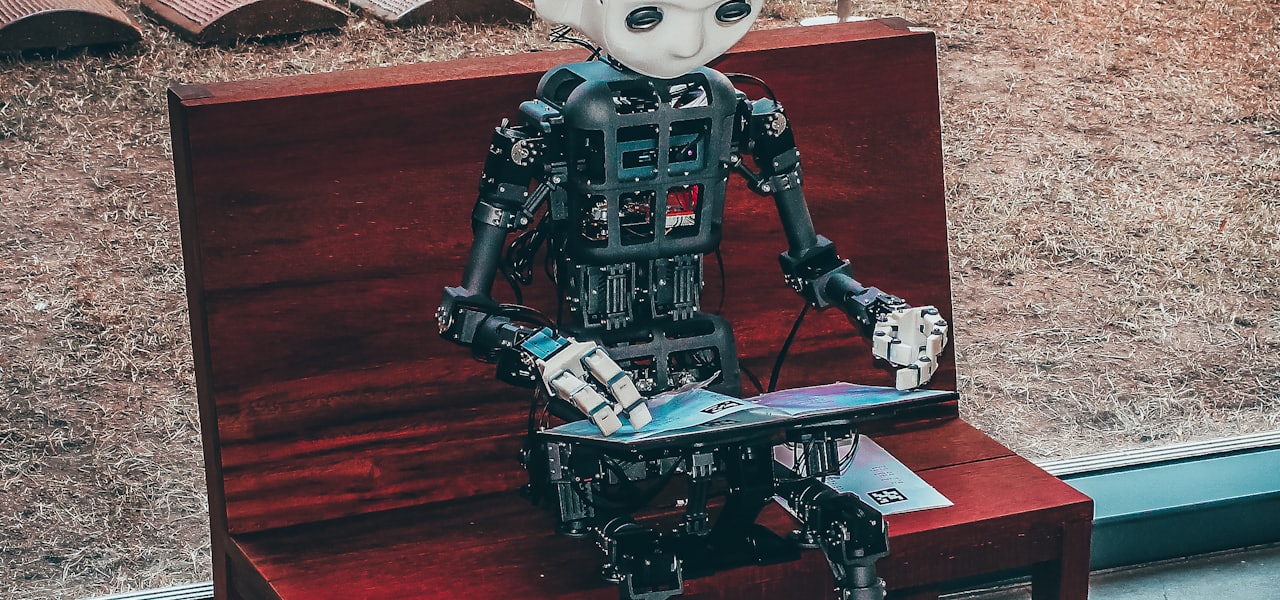
Robot Monk Xian'er (Chinese: 贤二机器僧) is a humanoid robot based on the cartoon character Xian'er. It was developed by a team of monks, volunteers and AI experts from Beijing Longquan Monastery in Beijing, China. He can follow human instructions to make body movements, read scriptures and play Buddhist music. He can chat and respond to people's emotional and spiritual questions with Buddhist wisdom. As a chatbot, Robot Monk Xian'er is available on certain public platforms including WeChat and Facebook. Over the years, master Xuecheng, the abbot of Beijing Longquan Monastery, replied to thousands of questions on Sina Weibo. These questions and their answers become the data source of the chatbot.
Pydio
Pydio Cells, previously known as just Pydio and formerly known as AjaXplorer, is an open-source file-sharing and synchronisation software that runs on the user's own server or in the cloud. == Presentation == The project was created by musician Charles Du Jeu (current CEO and CTO) in 2007 under the name AjaXplorer. The name was changed in 2013 and became Pydio (an acronym for Put Your Data in Orbit). In May 2018, Pydio switched from PHP to Go with the release of Pydio Cells. The PHP version reached end-of-life state on 31 December 2019. Pydio Cells runs on any server supporting a recent Go version. Windows/Linux/macOS on the Intel architecture are directly supported; a fully functional working ARM implementation is under active development. Pydio Cells has been developed from scratch using the Go programming language; release 4.0.0 introduced code refactoring to fully support the Go modular structure as well as grid computing. Nevertheless, the web-based interface of Cells is very similar to the one from Pydio 8 (in PHP), and it successfully replicates most of its features, while adding a few more. There is also a new synchronisation client (also written in Go). The PHP version has been phased out as the company's focus is moving to Pydio Cells, with community feedback on the new features. According to the company, the switch to the new environment was made "to overcome inherent PHP limitations and provide you with a future-proof and modern solution for collaborating on documents". From a technical point of view, Pydio differs from solutions such as Google Drive or Dropbox. Pydio is not based on a public cloud; instead, the software connects to the user's existing storage (such as SAN / Local FS, SAMBA / CIFS, (s)FTP, NFS, S3-compatible cloud storage, Azure Blob Storage, Google Cloud Storage) as well as to the existing user directories (LDAP / AD, OAuth2 / OIDC SSO, SAML / Azure ADFS SSO, RADIUS, Shibboleth...), which allows companies to keep their data inside their infrastructure, according to their data security policy and user rights management. The software is built in a modular perspective; up to Pydio 8, various plugins allowed administrators to implement extra features. On the server side, Pydio Cells is deployed as a collection of independent microservices communicating among themselves using gRPC and logging user actions via Activity Streams 2.0 (AS2). Pydio Cells microservices are built with the Go Micro framework (using an embedded NATS server). A standard installation will deploy all required services on the same physical server, but for the purposes of performance, reliability and high availability, these can now be spread across several different servers (even in geographically separate locations) according to the 12-factors architecture pattern. Pydio Cells is available either through a free and open-source community distribution (Pydio Cells Home), or a commercially-licensed enterprise distribution (in two variants, Pydio Cells Connect and Pydio Cells Enterprise), which add features not available in the community distribution as well as additional levels of support beyond the community forums. == Features == File sharing between different internal users and across other Pydio instances SSL/TLS Encryption WebDAV file server Creation of dedicated workspaces, for each line of business / project / client, with a dedicated user rights management for each workspace. File-sharing with external users (private links, public links, password protection, download limitation, etc.) Online viewing and editing of documents with Collabora Office (Pydio Cells Enterprise also offers OnlyOffice integration) Preview and editing of image files Integrated audio and video reader Activity stream ('timeline') for all actions taken by users Integrated chat platform Client applications are available for all major desktop and mobile platforms.
Jacek M. Zurada
Jacek M. Zurada is a Polish-American computer scientist who is a Professor of the Electrical and Computer Engineering Department at the University of Louisville, Kentucky. His M.S. and Ph.D. degrees are from Politechnika Gdaṅska (Gdansk University of Technology, Poland). He has held visiting appointments at the Swiss Federal Institute of Technology, Zurich, Princeton, Northeastern, and Auburn, and at overseas universities in Australia, Chile, China, France, Germany, Hong Kong, Italy, Japan, Poland, Singapore, Spain, and South Africa. He is a life fellow of IEEE and a fellow of the International Neural Networks Society and Doctor Honoris Causa of Czestochowa Institute of Technology, Poland. == Research == Zurada's research covers neural networks, deep learning, data mining with emphasis on data and feature understanding, rule extraction from semantic and visual information, machine learning, decomposition methods for salient feature extraction, and lambda learning rule for neural networks. == Professional and editorial service == Zurada was the editor-in-chief of IEEE Transactions on Neural Networks (1998–2003), an associate editor of IEEE Transactions on Circuits and Systems, Pt. I and Pt. II, Action Editor in Neural Networks (Elsevier) and on the editorial board of the Proceedings of the IEEE. He is an associate editor of Neurocomputing, Schedae Informaticae, the International Journal of Applied Mathematics and Computer Science, and Editor of the Springer Natural Computing, Advances in Intelligent Systems and Computing and Studies in Computational Intelligence Book series or volumes. == Awards and honours == In 2003 he was given the title of Professor by the President of Poland. Since 2005 he has been an elected Foreign Member of the Polish Academy of Sciences. He also received five honorary professorships from foreign universities, including Sichuan University in Chengdu, China, and Obuda University in Budapest, Hungary.
F-score
In statistical analysis of binary classification and information retrieval systems, the F-score or F-measure is a measure of predictive performance. It is calculated from the precision and recall of the test, where the precision is the number of true positive results divided by the number of all samples predicted to be positive, including those not identified correctly, and the recall is the number of true positive results divided by the number of all samples that should have been identified as positive. Precision is also known as positive predictive value, and recall is also known as sensitivity in diagnostic binary classification. The F1 score is the harmonic mean of the precision and recall. It thus symmetrically represents both precision and recall in one metric. The more generic F β {\displaystyle F_{\beta }} score applies additional weights, valuing one of precision or recall more than the other. The highest possible value of an F-score is 1.0, indicating perfect precision and recall, and the lowest possible value is 0, if the precision or the recall is zero. == Etymology == The name F-measure is believed to be named after a different F function in Van Rijsbergen's book, when introduced to the Fourth Message Understanding Conference (MUC-4, 1992). == Definition == The traditional F-measure or balanced F-score (F1 score) is the harmonic mean of precision and recall: F 1 = 2 r e c a l l − 1 + p r e c i s i o n − 1 = 2 p r e c i s i o n ⋅ r e c a l l p r e c i s i o n + r e c a l l = 2 T P 2 T P + F P + F N {\displaystyle F_{1}={\frac {2}{\mathrm {recall} ^{-1}+\mathrm {precision} ^{-1}}}=2{\frac {\mathrm {precision} \cdot \mathrm {recall} }{\mathrm {precision} +\mathrm {recall} }}={\frac {2\mathrm {TP} }{2\mathrm {TP} +\mathrm {FP} +\mathrm {FN} }}} With precision = TP / (TP + FP) and recall = TP / (TP + FN), it follows that the numerator of F1 is the sum of their numerators and the denominator of F1 is the sum of their denominators. If FP=FN F 1 = 2 T P 2 T P + 2 F P = T P T P + F P {\displaystyle F_{1}={\frac {2\mathrm {TP} }{2\mathrm {TP} +2\mathrm {FP} }}={\frac {\mathrm {TP} }{\mathrm {TP} +\mathrm {FP} }}} or F 1 = 2 T P 2 T P + 2 F N = T P T P + F N {\displaystyle F_{1}={\frac {2\mathrm {TP} }{2\mathrm {TP} +2\mathrm {FN} }}={\frac {\mathrm {TP} }{\mathrm {TP} +\mathrm {FN} }}} So, F1 = precision = recall If TP=FP=FN F 1 = 2 T P 2 T P + 2 F P = 2 T P 4 T P = 1 2 = 0.5 {\displaystyle F_{1}={\frac {2\mathrm {TP} }{2\mathrm {TP} +2\mathrm {FP} }}={\frac {2\mathrm {TP} }{4\mathrm {TP} }}={\frac {1}{2}}=0.5} or F 1 = 2 T P 2 T P + 2 F N = 2 T P 4 T P = 1 2 = 0.5 {\displaystyle F_{1}={\frac {2\mathrm {TP} }{2\mathrm {TP} +2\mathrm {FN} }}={\frac {2\mathrm {TP} }{4\mathrm {TP} }}={\frac {1}{2}}=0.5} To see it as a harmonic mean, note that F 1 − 1 = 1 2 ( r e c a l l − 1 + p r e c i s i o n − 1 ) {\displaystyle F_{1}^{-1}={\frac {1}{2}}(\mathrm {recall} ^{-1}+\mathrm {precision} ^{-1})} . === Fβ score === A more general F score, F β {\displaystyle F_{\beta }} , that uses a positive real factor β {\displaystyle \beta } , where β {\displaystyle \beta } is chosen such that recall is considered β {\displaystyle \beta } times as important as precision, is: F β = β 2 + 1 ( β 2 ⋅ r e c a l l − 1 ) + p r e c i s i o n − 1 = ( 1 + β 2 ) ⋅ p r e c i s i o n ⋅ r e c a l l ( β 2 ⋅ p r e c i s i o n ) + r e c a l l {\displaystyle F_{\beta }={\frac {\beta ^{2}+1}{(\beta ^{2}\cdot \mathrm {recall} ^{-1})+\mathrm {precision} ^{-1}}}={\frac {(1+\beta ^{2})\cdot \mathrm {precision} \cdot \mathrm {recall} }{(\beta ^{2}\cdot \mathrm {precision} )+\mathrm {recall} }}} To see that as a weighted harmonic mean, note that F β − 1 = 1 β + β − 1 ( β ⋅ r e c a l l − 1 + β − 1 ⋅ p r e c i s i o n − 1 ) {\displaystyle F_{\beta }^{-1}={\frac {1}{\beta +\beta ^{-1}}}(\beta \cdot \mathrm {recall} ^{-1}+\beta ^{-1}\cdot \mathrm {precision} ^{-1})} . In terms of Type I and type II errors this becomes: F β = ( 1 + β 2 ) ⋅ T P ( 1 + β 2 ) ⋅ T P + β 2 ⋅ F N + F P = ( 1 + β 2 ) ⋅ T P ( T P + F N ) ⋅ β 2 + ( T P + F P ) {\displaystyle F_{\beta }={\frac {(1+\beta ^{2})\cdot \mathrm {TP} }{(1+\beta ^{2})\cdot \mathrm {TP} +\beta ^{2}\cdot \mathrm {FN} +\mathrm {FP} }}\,={\frac {(1+\beta ^{2})\cdot \mathrm {TP} }{(\mathrm {TP} +\mathrm {FN} )\cdot \beta ^{2}+(\mathrm {TP} +\mathrm {FP} )}}\,} Two commonly used values for β {\displaystyle \beta } are 2, which weighs recall higher than precision, and 1/2, which weighs recall lower than precision. The F-measure was derived so that F β {\displaystyle F_{\beta }} "measures the effectiveness of retrieval with respect to a user who attaches β {\displaystyle \beta } times as much importance to recall as precision". It is based on Van Rijsbergen's effectiveness measure E = 1 − ( α p + 1 − α r ) − 1 {\displaystyle E=1-\left({\frac {\alpha }{p}}+{\frac {1-\alpha }{r}}\right)^{-1}} Their relationship is: F β = 1 − E {\displaystyle F_{\beta }=1-E} where α = 1 1 + β 2 {\displaystyle \alpha ={\frac {1}{1+\beta ^{2}}}} == Diagnostic testing == This is related to the field of binary classification where recall is often termed "sensitivity". == Dependence of the F-score on class imbalance == Precision-recall curve, and thus the F β {\displaystyle F_{\beta }} score, explicitly depends on the ratio r {\displaystyle r} of positive to negative test cases. This means that comparison of the F-score across different problems with differing class ratios is problematic. One way to address this issue (see e.g., Siblini et al., 2020) is to use a standard class ratio r 0 {\displaystyle r_{0}} when making such comparisons. == Applications == The F-score is often used in the field of information retrieval for measuring search, document classification, and query classification performance. It is particularly relevant in applications which are primarily concerned with the positive class and where the positive class is rare relative to the negative class. Earlier works focused primarily on the F1 score, but with the proliferation of large scale search engines, performance goals changed to place more emphasis on either precision or recall and so F β {\displaystyle F_{\beta }} is seen in wide application. The F-score is also used in machine learning. However, the F-measures do not take true negatives into account, hence measures such as the Matthews correlation coefficient, Informedness or Cohen's kappa may be preferred to assess the performance of a binary classifier. The F-score has been widely used in the natural language processing literature, such as in the evaluation of named entity recognition and word segmentation. == Properties == The F1 score is the Dice coefficient of the set of retrieved items and the set of relevant items. The F1-score of a classifier which always predicts the positive class converges to 1 as the probability of the positive class increases. The F1-score of a classifier which always predicts the positive class is equal to 2 proportion_of_positive_class / ( 1 + proportion_of_positive_class ), since the recall is 1, and the precision is equal to the proportion of the positive class. If the scoring model is uninformative (cannot distinguish between the positive and negative class) then the optimal threshold is 0 so that the positive class is always predicted. F1 score is concave in the true positive rate. == Criticism == David Hand and others criticize the widespread use of the F1 score since it gives equal importance to precision and recall. In practice, different types of mis-classifications incur different costs. In other words, the relative importance of precision and recall is an aspect of the problem. According to Davide Chicco and Giuseppe Jurman, the F1 score is less truthful and informative than the Matthews correlation coefficient (MCC) in binary evaluation classification. David M W Powers has pointed out that F1 ignores the True Negatives and thus is misleading for unbalanced classes, while kappa and correlation measures are symmetric and assess both directions of predictability - the classifier predicting the true class and the true class predicting the classifier prediction, proposing separate multiclass measures Informedness and Markedness for the two directions, noting that their geometric mean is correlation. Another source of critique of F1 is its lack of symmetry. It means it may change its value when dataset labeling is changed - the "positive" samples are named "negative" and vice versa. This criticism is met by the P4 metric definition, which is sometimes indicated as a symmetrical extension of F1. Finally, Ferrer and Dyrland et al. argue that the expected cost (or its counterpart, the expected utility) is the only principled metric for evaluation of classification decisions, having various advantages over the F-score and the MCC. Both works show that the F-score can result in wrong conclusions about the absolute and relative quality of systems. == Difference from Fowlkes–Mallows index == While the F-measur
Statistical machine translation
Statistical machine translation (SMT) is a machine translation approach where translations are generated on the basis of statistical models whose parameters are derived from the analysis of bilingual text corpora. The statistical approach contrasts with the rule-based approaches to machine translation as well as with example-based machine translation, that superseded the previous rule-based approach that required explicit description of each and every linguistic rule, which was costly, and which often did not generalize to other languages. The first ideas of statistical machine translation were introduced by Warren Weaver in 1949, including the ideas of applying Claude Shannon's information theory. Statistical machine translation was re-introduced in the late 1980s and early 1990s by researchers at IBM's Thomas J. Watson Research Center. Before the introduction of neural machine translation, it was by far the most widely studied machine translation method. == Basis == The idea behind statistical machine translation comes from information theory. A document is translated according to the probability distribution p ( e | f ) {\displaystyle p(e|f)} that a string e {\displaystyle e} in the target language (for example, English) is the translation of a string f {\displaystyle f} in the source language (for example, French). The problem of modeling the probability distribution p ( e | f ) {\displaystyle p(e|f)} has been approached in a number of ways. One approach which lends itself well to computer implementation is to apply Bayes' theorem, that is p ( e | f ) ∝ p ( f | e ) p ( e ) {\displaystyle p(e|f)\propto p(f|e)p(e)} , where the translation model p ( f | e ) {\displaystyle p(f|e)} is the probability that the source string is the translation of the target string, and the language model p ( e ) {\displaystyle p(e)} is the probability of seeing that target language string. This decomposition is attractive as it splits the problem into two subproblems. Finding the best translation e ~ {\displaystyle {\tilde {e}}} is done by picking up the one that gives the highest probability: e ~ = a r g max e ∈ e ∗ p ( e | f ) = a r g max e ∈ e ∗ p ( f | e ) p ( e ) {\displaystyle {\tilde {e}}=arg\max _{e\in e^{}}p(e|f)=arg\max _{e\in e^{}}p(f|e)p(e)} . For a rigorous implementation of this one would have to perform an exhaustive search by going through all strings e ∗ {\displaystyle e^{}} in the native language. Performing the search efficiently is the work of a machine translation decoder that uses the foreign string, heuristics and other methods to limit the search space and at the same time keeping acceptable quality. This trade-off between quality and time usage can also be found in speech recognition. As the translation systems are not able to store all native strings and their translations, a document is typically translated sentence by sentence. Language models are typically approximated by smoothed n-gram models, and similar approaches have been applied to translation models, but this introduces additional complexity due to different sentence lengths and word orders in the languages. Statistical translation models were initially word based (Models 1-5 from IBM Hidden Markov model from Stephan Vogel and Model 6 from Franz-Joseph Och), but significant advances were made with the introduction of phrase based models. Later work incorporated syntax or quasi-syntactic structures. == Benefits == The most frequently cited benefits of statistical machine translation (SMT) over rule-based approach are: More efficient use of human and data resources There are many parallel corpora in machine-readable format and even more monolingual data. Generally, SMT systems are not tailored to any specific pair of languages. More fluent translations owing to use of a language model == Shortcomings == Corpus creation can be costly. Specific errors are hard to predict and fix. Results may have superficial fluency that masks translation problems. Statistical machine translation usually works less well for language pairs with significantly different word order. The benefits obtained for translation between Western European languages are not representative of results for other language pairs, owing to smaller training corpora and greater grammatical differences. == Word-based translation == In word-based translation, the fundamental unit of translation is a word in some natural language. Typically, the number of words in translated sentences are different, because of compound words, morphology and idioms. The ratio of the lengths of sequences of translated words is called fertility, which tells how many foreign words each native word produces. Necessarily it is assumed by information theory that each covers the same concept. In practice this is not really true. For example, the English word corner can be translated in Spanish by either rincón or esquina, depending on whether it is to mean its internal or external angle. Simple word-based translation cannot translate between languages with different fertility. Word-based translation systems can relatively simply be made to cope with high fertility, such that they could map a single word to multiple words, but not the other way about. For example, if we were translating from English to French, each word in English could produce any number of French words— sometimes none at all. But there is no way to group two English words producing a single French word. An example of a word-based translation system is the freely available GIZA++ package (GPLed), which includes the training program for IBM models and HMM model and Model 6. The word-based translation is not widely used today; phrase-based systems are more common. Most phrase-based systems are still using GIZA++ to align the corpus. The alignments are used to extract phrases or deduce syntax rules. And matching words in bi-text is still a problem actively discussed in the community. Because of the predominance of GIZA++, there are now several distributed implementations of it online. == Phrase-based translation == In phrase-based translation, the aim is to reduce the restrictions of word-based translation by translating whole sequences of words, where the lengths may differ. The sequences of words are called blocks or phrases. These are typically not linguistic phrases, but phrasemes that were found using statistical methods from corpora. It has been shown that restricting the phrases to linguistic phrases (syntactically motivated groups of words, see syntactic categories) decreased the quality of translation. The chosen phrases are further mapped one-to-one based on a phrase translation table, and may be reordered. This table could be learnt based on word-alignment, or directly from a parallel corpus. The second model is trained using the expectation maximization algorithm, similarly to the word-based IBM model. == Syntax-based translation == Syntax-based translation is based on the idea of translating syntactic units, rather than single words or strings of words (as in phrase-based MT), i.e. (partial) parse trees of sentences/utterances. Until the 1990s, with advent of strong stochastic parsers, the statistical counterpart of the old idea of syntax-based translation did not take off. Examples of this approach include DOP-based MT and later synchronous context-free grammars. == Hierarchical phrase-based translation == Hierarchical phrase-based translation combines the phrase-based and syntax-based approaches to translation. It uses synchronous context-free grammar rules, but the grammars can be constructed by an extension of methods for phrase-based translation without reference to linguistically motivated syntactic constituents. This idea was first introduced in Chiang's Hiero system (2005). == Language models == A language model is an essential component of any statistical machine translation system, which aids in making the translation as fluent as possible. It is a function that takes a translated sentence and returns the probability of it being said by a native speaker. A good language model will for example assign a higher probability to the sentence "the house is small" than to "small the is house". Other than word order, language models may also help with word choice: if a foreign word has multiple possible translations, these functions may give better probabilities for certain translations in specific contexts in the target language. == Systems implementing statistical machine translation == Google Translate (started transition to neural machine translation in 2016) Microsoft Translator (started transition to neural machine translation in 2016) Yandex.Translate (switched to hybrid approach incorporating neural machine translation in 2017) == Challenges with statistical machine translation == Problems with statistical machine translation include: === Sentence alignment === Single sentences in one language can be found translated into several sentences in the o
List of Fortran software and tools
This is a list of Fortran software and tools, including IDEs, compilers, libraries, debugging tools, numerical and scientific computing tools, and related projects. == Fortran compilers == Absoft Pro Fortran — Absoft Pro Fortran is discontinued and ran on Linux and macOS AOCC — from AMD Classic Flang — part of the LLVM Project LLVM Flang — part of the LLVM Project Fortran 77 — Fortran 77 was developed by Digital Equipment Corporation, it is discontinued. G95 – portable open-source Fortran 95 compiler GCC (GNU Fortran) PGI compilers – NVIDIA developed compilers after acquiring The Portland Group IBM XL Fortran — IBM XL Fortran is current and runs on Linux (Power/AIX) and integrates with Eclipse Intel Fortran Compiler – part of Intel OneAPI HPC toolkit LFortran — LFortran is current, cross-platform, and has IDE support. MinGW – cross compiler and forked into Mingw-w64 nAG Fortran Compiler - from nAG Open64 — Open64 is an open-source compiler that has been terminated and ran on Linux Open Watcom — Open Watcom is current, runs on MS-DOS and OS/2, and has IDE support. Oracle Fortran — Oracle Fortran is discontinued, ran on Linux and Solaris. ROSE — source-to-source compiler framework developed at Lawrence Livermore National Laboratory Silverfrost FTN95 — FTN95 from Silverfrost is current, runs on Windows, and has IDE support. == Integrated development environments (IDEs) and editors == Code::Blocks — supports Fortran with plugins Eclipse IDE — with Fortran support via Photran Emacs — extensible text editor with built-in Fortran modes and support for modern tooling via language servers Geany — lightweight cross-platform IDE based on GTK IntelliJ IDEA — cross-platform IDE by JetBrains with Fortran pluggin KDevelop — KDE-based IDE NetBeans — Apache software foundation IDE with Fortran configuration OpenWatcom — IDE and compiler suite for C, C++, and Fortran Simply Fortran — standalone Fortran IDE for Windows, Linux, and macOS Vim — modal text editor with native Fortran syntax support and extensive plugin-based development features Visual Studio — with Intel Fortran integration Visual Studio Code — supports Fortran via extensions == Mathematical libraries == == Scientific libraries == ABINIT — software suite to calculate optical, mechanical, vibrational, and other observable properties of materials Cantera — chemical kinetics, thermodynamics, and transport tool suite CERN Program Library — collection of Fortran libraries for physics applications from CERN CP2K — quantum chemistry and solid-state physics software package for atomistic simulations Dalton — molecular electronic structure program FFTPACK — subroutines for the fast Fourier transform Kinetic PreProcessor – open-source software tool used in atmospheric chemistry MESA — Modules for Experiments in Stellar Astrophysics Nek5000 — MPI parallel higher-order spectral element CFD solver NWChem — open-source high-performance computational chemistry software Octopus — real-space Time-Dependent Density Functional Theory code MODTRAN – model atmospheric propagation of electromagnetic radiation MOLCAS — quantum chemistry software package for multiconfigurational electronic structure calculations NOVAS – software library for astrometry-related numerical computations Physics Analysis Workstation – data analysis and graphical presentation in high-energy physics Quantum ESPRESSO — integrated suite for electronic-structure calculations and materials modeling SIESTA — first-principles materials simulation code using density functional theory Tinker — software tools for molecular design == Debugging and performance tools == GDB — GNU Debugger with Fortran support Valgrind — memory debugging and profiling tool VTune Profiler — performance analysis tool Allinea Forge — debugger and profiler for HPC applications == Build and package management == Autotools — build system supporting Fortran projects CMake — cross-platform build system supporting Fortran Make — build automation tool Spack — package manager for HPC software including Fortran libraries == Machine learning and AI libraries == Athena Fiats (Functional Inference And Training for Surrogates) FNN (Fortran Neural Network) FortNN Fortran-TF-lib (Fortran interface to TensorFlow) FTorch (Fortran interface to PyTorch) MlFortran RoseNNa == Parallel and high-performance computing tools == MPI Fortran bindings — standard interface for distributed-memory parallelism OpenMP — shared-memory parallel programming support through compiler directives Coarray Fortran — parallel programming model introduced in Fortran 2008 ScaLAPACK — parallel linear algebra package built on top of LAPACK == Testing frameworks == FUnit — open-source unit testing framework developed at NASA’s Langley Research Center, for Fortran 90, 95, and 2003. pFUnit — unit testing framework for Fortran, modeled after JUnit == Documentation and code analysis tools == FORD — automatic documentation generator for modern Fortran projects SQuORE — software quality and management platform with code analysis support Understand — static analysis and code comprehension tool for large Fortran projects
AI Writing Assistants: Free vs Paid (2026)
Curious about the best AI writing assistant? An AI writing assistant is software that uses machine learning to help you get more done — it combines speed, accuracy, and an interface that just works. Hands-on testing shows real-world results vary, so a short free trial is the smartest way to decide. Whether you are a beginner or a pro, the right AI writing assistant slots into your workflow and pays for itself fast. This guide breaks down the top picks, their pros and cons, and who each one is best for.